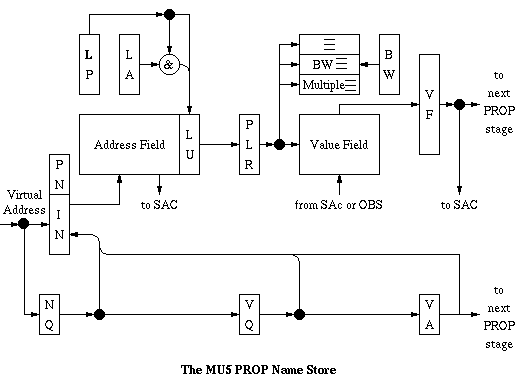
Thus the address and value fields of the Name Store (see figure below) each occupy one of these platters, and form two adjacent stages of the Primary Operand Unit (PROP) pipeline, through which instructions move in a series of beats (see under Pipelines). At each beat a virtual address generated in the previous two stages of the pipeline is copied into the Interrogate Register (IN), and concatenated with the contents of the Process Number register (PN), for presentation to the address field of the Name Store. A full virtual address in MU5 consists of a 4-bit Process Number, a 14-bit Segment and 16 bits which identify a 32-bit word within a segment. Addresses presented to the Name Store do not contain the Segment Number, however, since it was assumed at the design stage that the Name Segment would always be zero, and only 15 of the word address bits are used, referring to 64-bit operands. Where necessary, a 32-bit operand is selected from within a 64-bit word in a later stage of the pipeline.